Rethinking a river in crisis: A book review of the Heads and Tails of the GangaThe Ganga is often invoked as a lifeline, sacred, sustaining, and...
Published by Water Network Research, Official research team of The Water Network
Rethinking a river in crisis: A book review of the Heads and Tails of the Ganga
The Ganga is often invoked as a lifeline, sacred, sustaining, and central to millions of lives. Yet much of what we understand about the river comes in fragments: polluted urban stretches, isolated conservation efforts, or cultural narratives tied to specific places. This raises a larger question—are we really seeing the river as a whole?
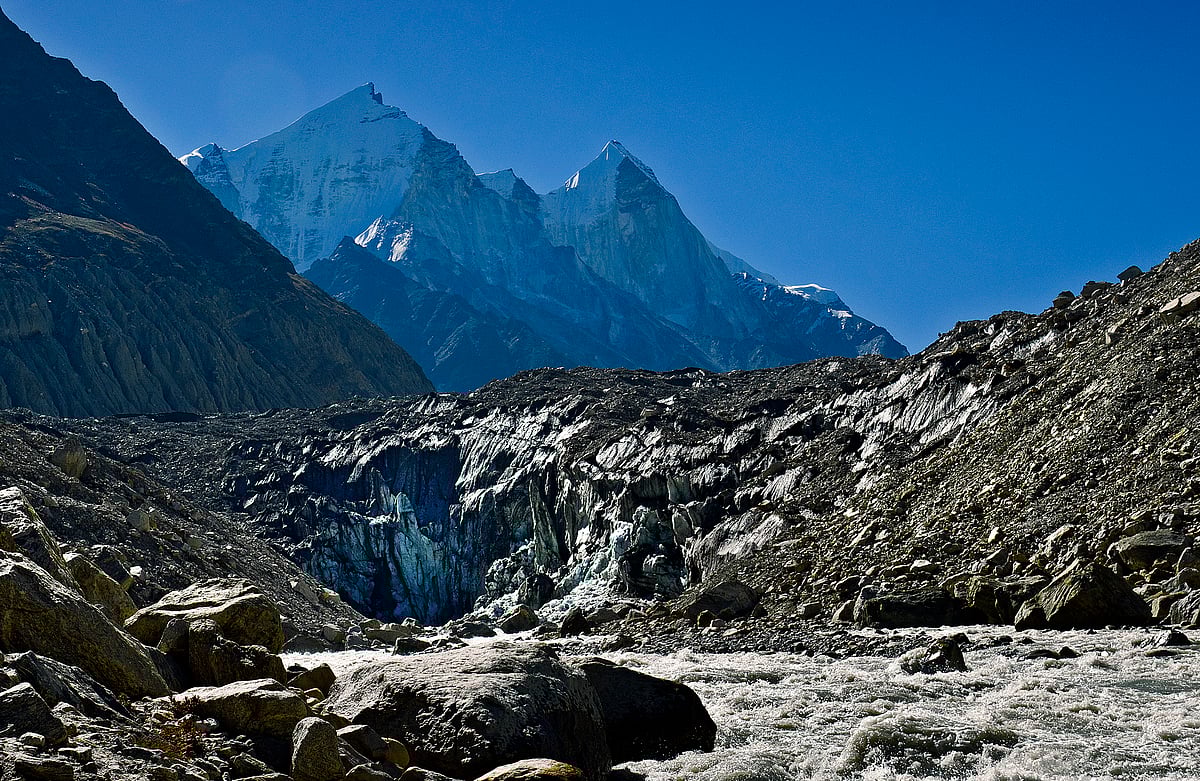
Gomukh, the glacier considered to be the primary source of the Ganges in the Indian Himalayas.
Gomukh, the glacier considered to be the primary source of the Ganges in the Indian Himalayas.
Source: Pranab basak via Wikimedia Commons
Author:
Aarti Kelkar Khambete
Aarti Kelkar Khambete
Updated on:
03 Apr 2026, 8:24 am
9 min read
Follow Us
The Ganges, the lifeline of India
The river Ganga, one of the most important in India, supports millions of people along its banks and forms one of the largest river basins in the world, spanning about 1,087,852 square kilometres across India, Nepal, Bangladesh, and Tibet. It generates an estimated 525 billion cubic metres of water annually, with nearly 40% of its flow coming from Nepal through major tributaries such as the Ghaghra, Kali-Gandaki, and Sapta Kosi, much of which originates in Tibet, a relatively lesser-known aspect of the river system.
In The Heads and Tails of the Ganga, Vijay Paranjpye, Radhika Mulay, and Chaitrali Kulkarni trace the river’s full journey, from its icy Himalayan origins shaped by glaciers, snowfields, and permafrost to the vast, biodiverse delta where it meets the Bay of Bengal. Drawing on extensive field-based research, the book shifts attention away from familiar riverbanks to the less visible extremes of the basin—the fragile headwaters and the dynamic delta systems.
At the heart of the book is a clear argument: the Ganga cannot be understood or restored in parts. By following the river across diverse landscapes, ice, forests, floodplains, and mangroves, it presents the Ganga as a connected, living system shaped by both natural processes and human intervention. This review examines how effectively the book develops this perspective, where it offers meaningful insight, and where it leaves room for greater clarity or depth.
Pollution and lesser-known aspects of the river
Despite its importance, the Ganga remains highly polluted. The book notes that pollution levels have exceeded the river’s natural ability to absorb and recover while human interventions and climate change continue to worsen its condition. It argues that most studies focus on pollution and urban impacts along the main river but overlook what is happening at the source and at the tail end where the river meets the sea. Without this full view, efforts to address the crisis remain incomplete.
As the authors state, “In our anxiety to overcome the immediate crisis of river pollution and dry stretches which threaten the perennial flows in the river, we have ignored the impact of changes taking place in the water towers of the basin, i.e., the Cryosphere of the Ganga and the tail reaches beyond Farakka, in West Bengal and Bangladesh.”
The book places the river in a wider context, linking it to the development of civilisations along its course, from its origin in the Himalayas to the Ganga-Brahmaputra-Meghna delta. The upper reaches, or cryosphere, remain poorly understood due to their inaccessibility and harsh conditions, stretching from Banderpoonch to the Kangchendzonga ridge on the border of Nepal and Sikkim. Similarly, the book also draws attention to the river’s neglected extremes pointing at the last 300 kilometres of the Ganga, forming the delta in Bangladesh, which remain under-represented in planning and management, despite their ecological importance.
It also challenges common assumptions about the river’s origin, noting that its headwater streams and major tributaries are more widespread than often believed, and are not located merely around its origin near Uttarakhand, but are actually spread across the band of the central Himalaya, taking the shape of the mythological ‘Shesha Naag’, from Banderpoonch to the Kanchendzonga ridgeline in the cryosphere region.
The cryosphere of the Ganga
The cryosphere of the Ganga
Source: Paranjpye et al. (2023) The Heads and Tails of the Ganga. INTACH, p 27
The book draws attention to an important but lesser-known change in the river system: “What is commonly not known is that till about 250 years ago, The Ganga and the Brahmaputra were two independent and discrete river basins, with two well-separated exit points, which discharged their water into the Bay of Bengal. However, between 1776 and 1787, the mainstream Ganga migrated to the east, while the Brahmaputra migrated towards the west, consequently creating a confluence of the two rivers in the Rajbari district in Bangladesh and then travelling together southwards for about 250 kms, taking along the waters of the Meghana river."
The authors further explain how this system now functions, saying, “The three rivers eventually travel together as a single mammoth stream to exit into the Bay of Bengal." Incidentally, the traditional name of the Bay of Bengal was Gangasagar, i.e., the sea that receives the waters of Ganga. The three rivers form multiple minor distributaries and keep merging and braiding periodically; hence, the allegory of the tail which swings and swishes from east to west and west to east. Therefore, the tails of the Ganga consist of the entire deltaic region spread over parts of West Bengal in India and the entire of Bangladesh from the Gangasagar island to the west and the Bhola island to the east."
The Ganga Brahmaputra delta
The Ganga Brahmaputra delta
Source: Paranjpye et al. (2023) The Heads and Tails of the Ganga. INTACH, p 331
The culturally and environmentally diverse Ganga
Starting from this premise the book provides an extraordinarily expansive account of the river Ganges, as a young, bubbling, flowing still evolving river that travels numerous topographies - from the top of the frozen mountain glaciers where it originates to the rich deltaic regions that it gradually feathers into, to finally meet the sea. Boundaries dissolve as the river flows through landscapes, while the book weaves into it tales from the ground - of cultural and mythological beliefs and traditions on the origin of the Ganges, of ancient epics, anecdotes, pilgrimages and yatras that bind communities together, of communities that have depended on the river waters for years and the thriving biodiversity with the wonderous plants and animals that live in and around its waters.
The book dives into the incredibly biodiverse regions of the Ganga river basin -the glacial ecosystems and lakes to river and spring ecosystems, meadows and grasslands, forests, floodplains, agrarian ecosystems and delta ecosystems, all displaying unique diversity.
The book refers to species such as the Brahmakamal, Bhojapatra tree, and Bharal in the Himalayas, and aquatic life such as phytoplankton and zooplankton, walking catfish, gouramis, and the Ganges river dolphin. It also covers the Sundarbans mangrove forests and the Royal Bengal Tiger.
The Ganga is often invoked as a lifeline, sacred, sustaining, and central to millions of lives. Yet much of what we understand about the river comes in fragments: polluted urban stretches, isolated conservation efforts, or cultural narratives tied to specific places. This raises a larger question—are we really seeing the river as a whole?
Gomukh, the glacier considered to be the primary source of the Ganges in the Indian Himalayas.
Gomukh, the glacier considered to be the primary source of the Ganges in the Indian Himalayas.
Source: Pranab basak via Wikimedia Commons
Author:
Aarti Kelkar Khambete
Aarti Kelkar Khambete
Updated on:
03 Apr 2026, 8:24 am
9 min read
Follow Us
The Ganges, the lifeline of India
The river Ganga, one of the most important in India, supports millions of people along its banks and forms one of the largest river basins in the world, spanning about 1,087,852 square kilometres across India, Nepal, Bangladesh, and Tibet. It generates an estimated 525 billion cubic metres of water annually, with nearly 40% of its flow coming from Nepal through major tributaries such as the Ghaghra, Kali-Gandaki, and Sapta Kosi, much of which originates in Tibet, a relatively lesser-known aspect of the river system.
In The Heads and Tails of the Ganga, Vijay Paranjpye, Radhika Mulay, and Chaitrali Kulkarni trace the river’s full journey, from its icy Himalayan origins shaped by glaciers, snowfields, and permafrost to the vast, biodiverse delta where it meets the Bay of Bengal. Drawing on extensive field-based research, the book shifts attention away from familiar riverbanks to the less visible extremes of the basin—the fragile headwaters and the dynamic delta systems.
At the heart of the book is a clear argument: the Ganga cannot be understood or restored in parts. By following the river across diverse landscapes, ice, forests, floodplains, and mangroves, it presents the Ganga as a connected, living system shaped by both natural processes and human intervention. This review examines how effectively the book develops this perspective, where it offers meaningful insight, and where it leaves room for greater clarity or depth.
Pollution and lesser-known aspects of the river
Despite its importance, the Ganga remains highly polluted. The book notes that pollution levels have exceeded the river’s natural ability to absorb and recover while human interventions and climate change continue to worsen its condition. It argues that most studies focus on pollution and urban impacts along the main river but overlook what is happening at the source and at the tail end where the river meets the sea. Without this full view, efforts to address the crisis remain incomplete.
As the authors state, “In our anxiety to overcome the immediate crisis of river pollution and dry stretches which threaten the perennial flows in the river, we have ignored the impact of changes taking place in the water towers of the basin, i.e., the Cryosphere of the Ganga and the tail reaches beyond Farakka, in West Bengal and Bangladesh.”
The book places the river in a wider context, linking it to the development of civilisations along its course, from its origin in the Himalayas to the Ganga-Brahmaputra-Meghna delta. The upper reaches, or cryosphere, remain poorly understood due to their inaccessibility and harsh conditions, stretching from Banderpoonch to the Kangchendzonga ridge on the border of Nepal and Sikkim. Similarly, the book also draws attention to the river’s neglected extremes pointing at the last 300 kilometres of the Ganga, forming the delta in Bangladesh, which remain under-represented in planning and management, despite their ecological importance.
It also challenges common assumptions about the river’s origin, noting that its headwater streams and major tributaries are more widespread than often believed, and are not located merely around its origin near Uttarakhand, but are actually spread across the band of the central Himalaya, taking the shape of the mythological ‘Shesha Naag’, from Banderpoonch to the Kanchendzonga ridgeline in the cryosphere region.
The cryosphere of the Ganga
The cryosphere of the Ganga
Source: Paranjpye et al. (2023) The Heads and Tails of the Ganga. INTACH, p 27
The book draws attention to an important but lesser-known change in the river system: “What is commonly not known is that till about 250 years ago, The Ganga and the Brahmaputra were two independent and discrete river basins, with two well-separated exit points, which discharged their water into the Bay of Bengal. However, between 1776 and 1787, the mainstream Ganga migrated to the east, while the Brahmaputra migrated towards the west, consequently creating a confluence of the two rivers in the Rajbari district in Bangladesh and then travelling together southwards for about 250 kms, taking along the waters of the Meghana river."
The authors further explain how this system now functions, saying, “The three rivers eventually travel together as a single mammoth stream to exit into the Bay of Bengal." Incidentally, the traditional name of the Bay of Bengal was Gangasagar, i.e., the sea that receives the waters of Ganga. The three rivers form multiple minor distributaries and keep merging and braiding periodically; hence, the allegory of the tail which swings and swishes from east to west and west to east. Therefore, the tails of the Ganga consist of the entire deltaic region spread over parts of West Bengal in India and the entire of Bangladesh from the Gangasagar island to the west and the Bhola island to the east."
The Ganga Brahmaputra delta
The Ganga Brahmaputra delta
Source: Paranjpye et al. (2023) The Heads and Tails of the Ganga. INTACH, p 331
The culturally and environmentally diverse Ganga
Starting from this premise the book provides an extraordinarily expansive account of the river Ganges, as a young, bubbling, flowing still evolving river that travels numerous topographies - from the top of the frozen mountain glaciers where it originates to the rich deltaic regions that it gradually feathers into, to finally meet the sea. Boundaries dissolve as the river flows through landscapes, while the book weaves into it tales from the ground - of cultural and mythological beliefs and traditions on the origin of the Ganges, of ancient epics, anecdotes, pilgrimages and yatras that bind communities together, of communities that have depended on the river waters for years and the thriving biodiversity with the wonderous plants and animals that live in and around its waters.
The book dives into the incredibly biodiverse regions of the Ganga river basin -the glacial ecosystems and lakes to river and spring ecosystems, meadows and grasslands, forests, floodplains, agrarian ecosystems and delta ecosystems, all displaying unique diversity.
The book refers to species such as the Brahmakamal, Bhojapatra tree, and Bharal in the Himalayas, and aquatic life such as phytoplankton and zooplankton, walking catfish, gouramis, and the Ganges river dolphin. It also covers the Sundarbans mangrove forests and the Royal Bengal Tiger.
Tags
- Technology
- River Studies
- IT
- River Basin management
- River Restoration
- India
- Bangladesh